
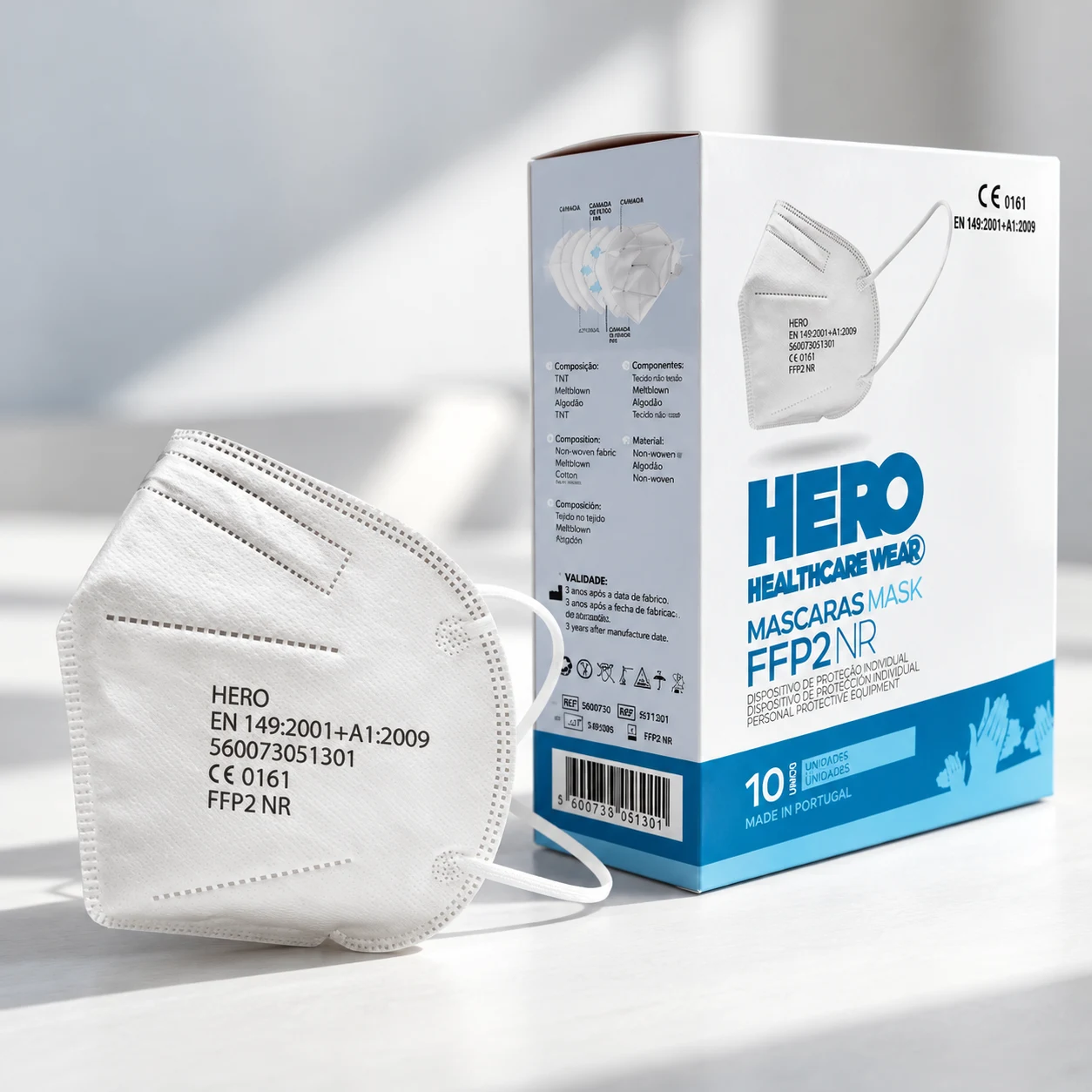
In respiratory protection — in industry, construction, healthcare or everyday use — the FFP2 mask has become one of the most effective forms of personal protective equipment (PPE). However, high demand has also encouraged counterfeit, substandard and falsely certified products in the European market.
Using an uncertified or illegitimate FFP2 mask creates a false sense of security. Around fine dust, aerosols or biological agents, filter material without adequate electrostatic charge or an effective seal can expose the wearer to serious respiratory risks.
The European Union sets clear technical criteria to help protect your company or family. This guide explains how to identify mask markings, what they mean and how to check the authenticity of conformity documentation.
1. Markings to Check on the Mask
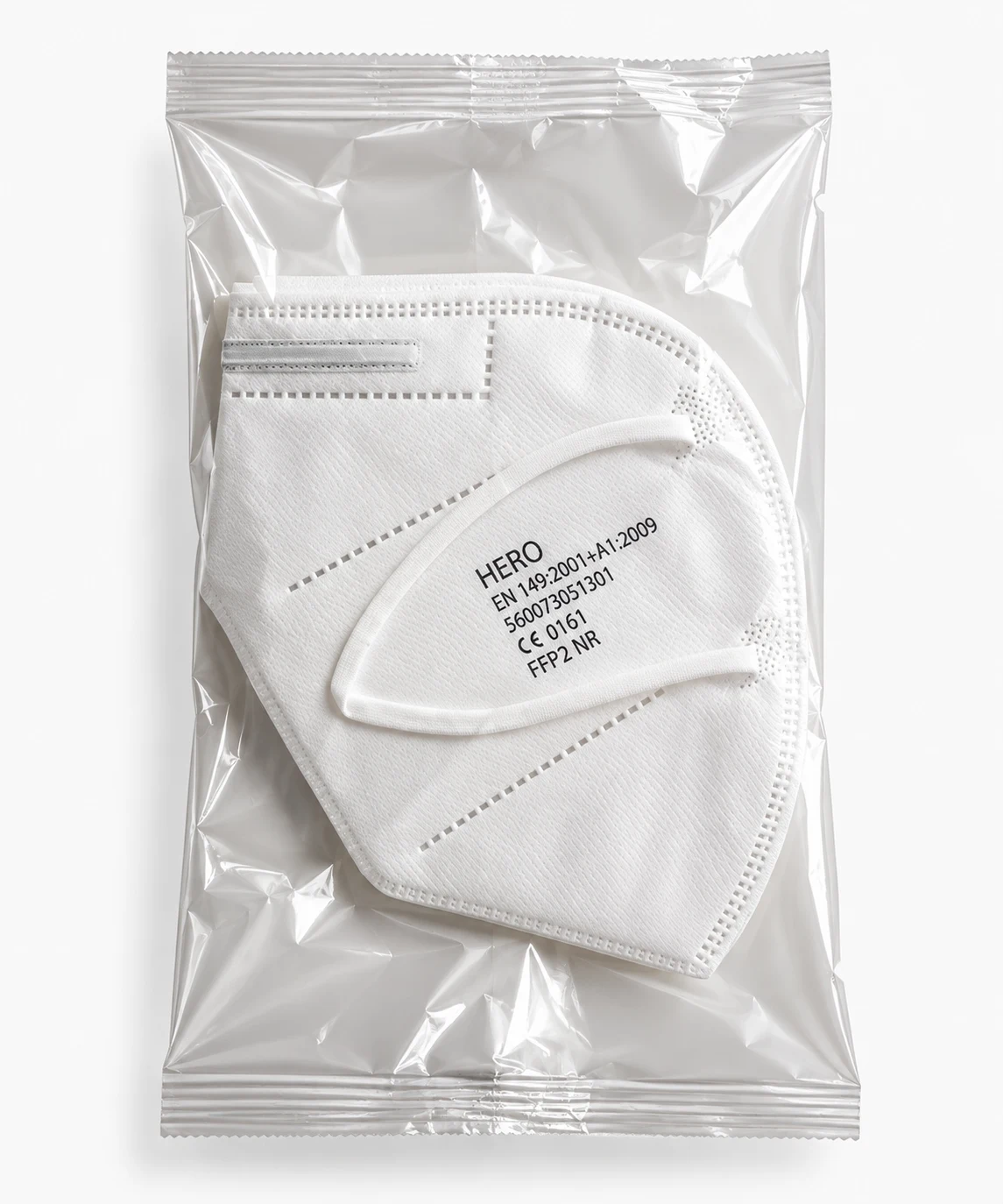
Check the mask markings, packaging and instructions together. For filtering half masks following EN 149, look for the manufacturer and model, standard reference, protection class and reuse classification, alongside CE marking and the notified body's number.
These markings are initial checks: their presence alone does not establish product authenticity or valid certification.
CE Marking Followed by the Notified Body's Four Digits
The letters “CE” alone do not guarantee that a respirator is approved PPE in Europe.
FFP2 masks are Category III PPE. Their CE marking must be accompanied by the four-digit identification number of the notified body involved in production control.
What do the four digits mean? They identify the body responsible for conformity assessment during production control under Module C2 or D. This may differ from the body that issued the EU type-examination certificate under Module B.
Warning Sign: Missing required information or misuse of a notified body's number calls for documentary checks before buying or using the product.
European Standard EN 149:2001+A1:2009
EN 149:2001+A1:2009 is a harmonised standard for particle-filtering half masks. Applying it is one way of demonstrating conformity with the applicable requirements of Regulation (EU) 2016/425, but not the only legally possible route.
What does this standard assess?
- Filter Material Penetration: For FFP2, the filter material must achieve at least 94% efficiency in standardised tests. This is not a universal 0.6 µm particle-size limit and does not by itself guarantee complete wearer protection.
- Breathing Resistance: Assessment of resistance to inhaling and exhaling through the equipment.
- Total Inward Leakage: Assessment of unfiltered air entering the mask, which also depends on facial fit.
Use Classification: FFP2 NR or FFP2 R
FFP stands for Filtering Face Piece. The classification should indicate the protection category and whether reuse is permitted:
- FFP2 NR (Non-Reusable): Designed for a single working shift. This does not mean eight guaranteed hours: follow the manufacturer's instructions and replace it if damaged, dirty, damp or difficult to breathe through.
- FFP2 R (Reusable): Designed for more than one shift, subject to the manufacturer's specified use, cleaning, disinfection and maintenance conditions.
If the mask has an exhalation valve, check its characteristics in the instructions. V is not a standard EN 149 classification marking. A conventional valve may release exhaled air without filtering it.
2. Differences Between FFP2, N95 and KN95: Understanding the Terms
FFP2, N95 and KN95 are often used interchangeably. Although their nominal filtration levels are similar, they belong to different assessment systems and their tests are not identical:
| Protection standard | Technical reference | Originating system | Marketing as PPE in the EU |
|---|---|---|---|
| FFP2 | EN 149:2001+A1:2009 | European Union | Requires conformity with Regulation (EU) 2016/425 |
| N95 | NIOSH — 42 CFR Part 84 | United States | NIOSH approval does not replace European conformity assessment |
| KN95 | GB 2626 | China | The KN95 reference does not replace European conformity assessment |
To be marketed as PPE in the European Union, a product must meet the applicable requirements of Regulation (EU) 2016/425, including the required conformity assessment, documentation and CE marking.
3. How to Validate Conformity Documentation Step by Step
Alongside checking markings, buyers should request the EU Declaration of Conformity and EU type-examination certificate, Module B. Category III PPE also requires production control under Module C2 or D.
To check these documents, follow three steps:
- Identify the Notified Bodies: Identify the body issuing the EU type-examination certificate and the body whose number accompanies the CE marking for production control. Their numbers may differ.
- Consult the NANDO Database: The European Commission provides the official database of notified bodies.
- Check the Scope and Documents: Confirm notification for Regulation (EU) 2016/425 and the relevant products and modules. Check with the issuer that the certificate is authentic, valid and matches the stated model and manufacturer.
An organisation's presence in NANDO does not automatically authenticate an individual certificate. Without the appropriate notification scope, a body cannot issue the assessment required for that product and module.
4. Physical Warning Signs and Poor Quality
Even if markings appear correct, construction and packaging details can justify further checks:
- Packaging and Identification: Check packaging integrity, manufacturer identification, traceability and the stated expiry or storage date. Individually sealed packaging alone does not establish conformity.
- Weak or Loose Straps: FFP2 effectiveness depends directly on facial fit. Straps that are too loose, lack elasticity or detach easily may compromise the seal.
- Fit Around the Nose: Where a model includes a nose clip, it should allow the intended fit. Check the seal according to the equipment instructions.
- Instructions for Use: Check for instructions in the language required by the country of sale; in Portugal, Portuguese.
The Importance of Provenance in Respiratory Protection
Protection against fine particles, industrial fumes and airborne pathogens leaves no room for uncertainty. Checking markings, conformity documentation and notified bodies helps establish whether applicable requirements are met. Equipment selection and facial fit remain essential during use.
At Brinutex, PPE selection follows European standards and regulations rigorously. We offer certified, traceable respiratory protection for businesses and individual use.
If you want to equip your team with safe respiratory protection that meets legal requirements, explore protective equipment and FFP2 masks in the Brinutex online shop and work with confidence.

Comments
Comments are published after approval by Brinutex.
Write a comment