
Workwear is much more than a functional or protective requirement: it is one of the most visible extensions of a company's visual identity. Every day, when interacting with customers, suppliers or the public, your team carries your brand image.
A common frustration for purchasing, HR and operational managers is seeing customisation deteriorate after just weeks of use or a few washes: cracking logos, fading colours or embroidery that puckers the fabric.
Choosing the right technique is more than an aesthetic decision. It depends directly on fabric type, garment weight, logo complexity and the employee's working environment.
This guide examines computerised embroidery, screen printing and DTF (Direct to Film), explaining their advantages, limitations and applications for professional, durable uniforms.
1. The Main Textile Customisation Techniques
To make the right decision, it helps to understand how each technology works on the fabric and performs during use and washing.
| Characteristic | Embroidery | Screen printing | DTF (Direct to Film) |
|---|---|---|---|
| Durability | High, depending on thread and application | High | Medium to high |
| Finish | Premium / refined raised finish | Flat / matt or glossy | Flat / photographic definition |
| Details and gradients | Limited | Good (solid colours) | Excellent (multiple colours) |
| Ideal fabrics | Medium and heavy fabrics | Depending on ink system and fabric | Depending on transfer and fabric compatibility |
| Wash resistance | Depending on garment and thread | Depending on ink and curing | Depending on transfer and application |
Durability and washing temperature depend on the garment, threads, inks and transfers used, and the manufacturer's instructions.
A. Computerised Embroidery: A Refined, Durable Finish
Embroidery is a classic, prestigious textile customisation technique. Strong threads are applied directly to fabric using precision industrial machines guided by digitised stitch files.
Main Advantages:
- Durability: Quality embroidery threads can offer high resistance to wear and washing when suitable for the garment and its care conditions.
- High Perceived-Value Appearance: The three-dimensional finish, with texture and a subtle sheen, gives the garment a refined, professional appearance.
- Chemical and Thermal Resistance: Embroidery can suit industrial washing when the thread, fabric and application are compatible with the process used.
Limitations to Consider:
- Not Suited to Very Fine Fabrics: On lightweight T-shirts or fine knits below 160 g/m², stitch density can pucker the fabric and create a heavy or uncomfortable drape.
- Very Small Detail Limitations: Letters under 4 mm high and continuous colour gradients cannot be reproduced with thread.
B. Screen Printing: The Classic Solution for Large Quantities
Screen printing is a traditional method that transfers ink directly to the garment through prepared mesh screens. It is a leading technique for volume production.
Main Advantages:
- Excellent Value at Scale: It is economical for medium and large orders with logos in a limited number of colours.
- Soft Feel and Flexibility: Ink penetrates the fibres, keeping the garment lightweight and breathable, especially cotton T-shirts.
- Vibrant Colours on Dark Backgrounds: Opaque inks can closely match corporate Pantone colours.
Limitations to Consider:
- Initial Setup Cost: A screen is needed for each logo colour, making small runs less economical.
- Sensitivity to Washing Conditions: Resistance depends on the ink, curing and garment; follow the manufacturer's temperatures and care conditions.
C. DTF (Direct to Film): The Digital Printing Revolution
DTF is a major recent textile innovation. A logo is printed in high definition on a special film, then transferred to fabric using heat, pressure and adhesive powder.
Main Advantages:
- Photographic Definition Without a Colour Limit: It reproduces tiny details, shading, complex gradients and photographs in high definition.
- Versatile Substrates: It can be applied to various fabrics but requires compatibility testing, particularly on nylon, treated fabrics, softshell and waterproof materials.
- Ideal for Small Quantities and Complex Positions: No screens or plates are needed, allowing precise customisation of sleeves, collars and pockets.
Limitations to Consider:
- Lower Breathability in the Printed Area: On large prints, such as a full back, the film forms a barrier to airflow in that area.
- Washing Care: Follow garment and transfer instructions; wash inside out and do not iron directly over the print.
2. How to Choose the Right Technique for the Sector and Garment
To avoid common uniform selection mistakes, we match typical sector requirements with recommended customisation methods:
Executive Settings, Customer Service and Hospitality Front of House
- Typical Garments: Medium- or heavyweight polo shirts, shirts, blazers, softshell jackets and well-cut aprons.
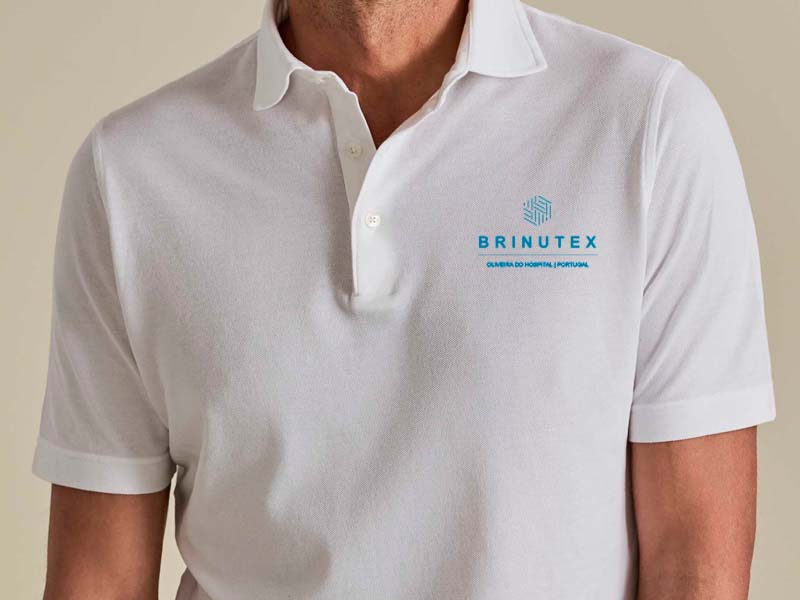
- Recommended Technique: Computerised embroidery on the chest or collar.
- Why: It conveys distinction, elegance and restraint, reinforcing the brand's prestige with customers.
Healthcare, Beauty and Industrial Cleaning
- Typical Garments: Clinical tunics, laboratory coats and scrubs.
- Recommended Technique: Embroidery for names and roles, or DTF with validated resistance to the washing process.
- Why: Customisation must be compatible with the garment's required cleaning process, including temperature and products used.
Industry, Logistics and Construction
- Typical Garments: Operational T-shirts, frequently used polo shirts, multi-pocket trousers and protective jackets.
- Recommended Technique: Screen printing for large T-shirt runs, or embroidery/DTF in reinforced areas such as pockets and sleeves.
- Why: It balances large-scale corporate logo visibility with the economy and durability required for demanding operational work.
3. Three Common Uniform Customisation Mistakes and How to Avoid Them
Embroidering Fabrics That Are Too Light
The Problem: Dense embroidery on a 140 g/m² T-shirt puckers the surrounding knit and can feel uncomfortable against the chest.
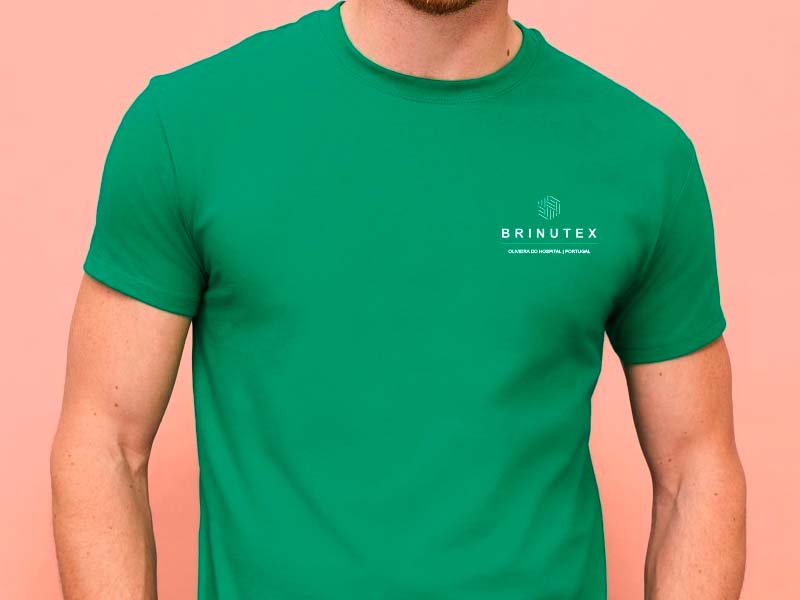
The Solution: For lightweight T-shirts, choose screen printing or DTF; reserve embroidery for polo shirts from 190 g/m², shirts, jackets and coats.
Ironing Directly Over Prints
The Problem: A hot iron applied directly to screen printing or DTF can damage the print and mark the garment.
The Solution: Instruct teams to iron garments inside out, following the garment label and customisation instructions.
Ignoring Logo Proportion and Position
The Problem: An oversized chest logo can be hidden when the garment folds or interfere with movement.
The Solution: Follow typical dimensions: left chest, approximately 8–10 cm wide; back, 22–28 cm; sleeves, 6–8 cm.
Quality Assurance and an Immaculate Corporate Image
Choosing embroidery, screen printing or DTF means balancing garment function, desired image and budget. Understanding these factors helps turn your workwear investment into durability, comfort and team pride.
At Brinutex, we combine over 16 years of corporate workwear experience with modern customisation equipment. We assess your visual identity and daily operations to recommend the most effective technique for each garment.
Ask Brinutex for advice on customising your team's uniforms.

Comments
Comments are published after approval by Brinutex.
Write a comment